The bronze angel is by the well-known sculptor Henry Kirke Brown; according to the cemetery site, it was one of the first bronze statues cast by an American foundry. Since George Hogg died at the end of 1849, the angel probably dates from about 1850.
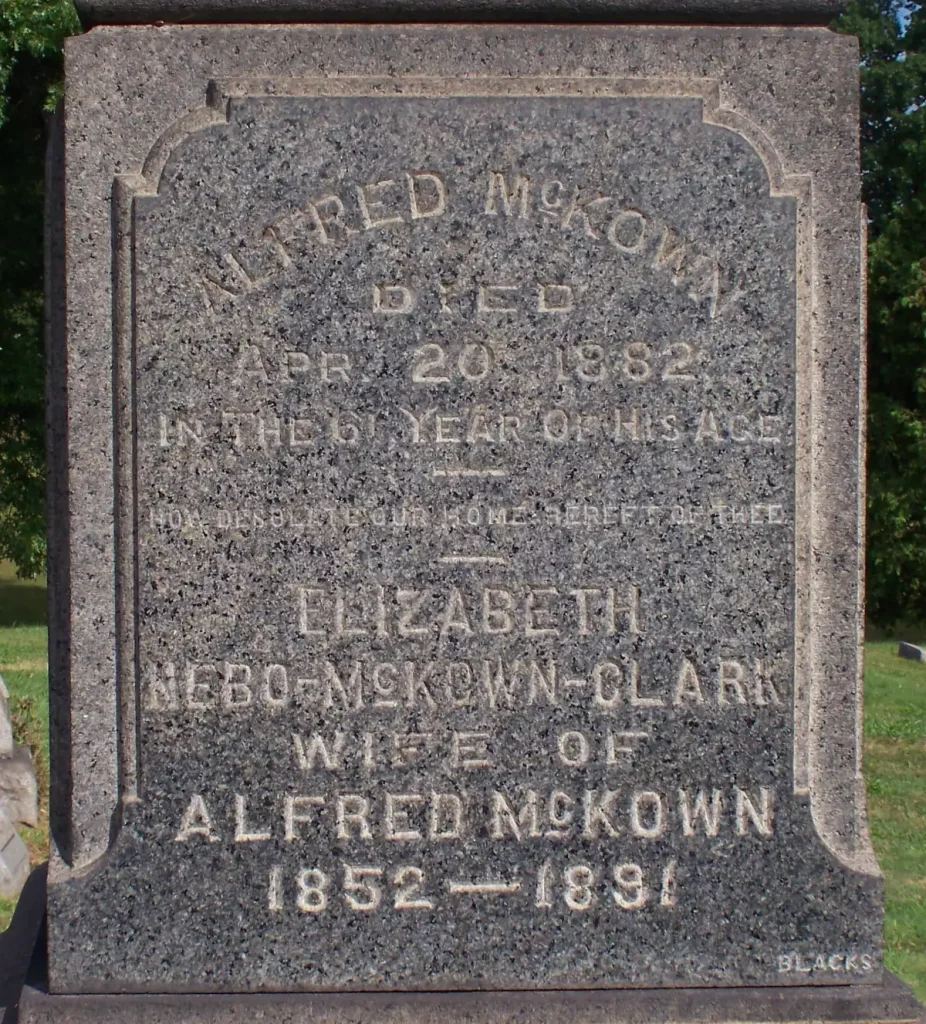
This is a fairly standard obelisk with some extra ornamentation to make sure it is not too plain for Victorian taste. There must be an interesting family story in the inscription. Alfred McKown married a woman more than thirty years younger than he was. When he died, it seems that the 29- or 30-year-old widow married a man named Clark. She did not live to see forty, and she is memorialized here. If she is buried here, one wonders what became of Mr. Clark.
The name “Blacks” appears below the inscription; is it the name of the stonecutter or monument dealer?
A typical rustic stump, and not the most artistic one Father Pitt has seen. The “Gilmore” inscription appears to be the original one, with “Donaldson” added later. The idea of bark peeled away to reveal the family name is clever, but some effort should have been put into making the peeled-away bark match the shape of the section from which it is supposed to have been peeled away.
This stump stands in the middle of the Donaldson family plot, which is marked by four small rustic stumps at the corners—something old Pa Pitt has never seen before.
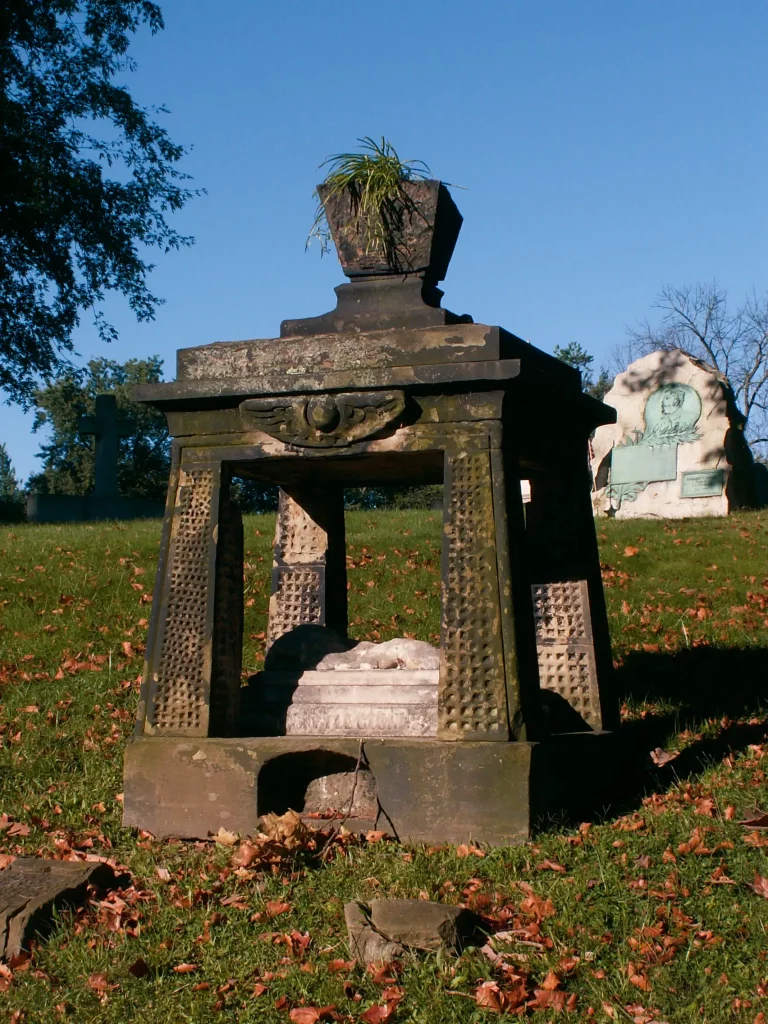
In some ways this is the oddest monument in the Allegheny Cemetery, though in that category it faces some very stiff competition. It is an Egyptian-style canopy of sandstone over a marble statue that has almost entirely disintegrated. In fact we know the name “Warden” only from the cemetery’s site. We can barely make out the words “Little George” under the remains of the statue.
The Egyptian style is remarkable enough for the middle 1800s, but this monument is odder than the few other remnants of the first Egyptian revival. The pattern of holes in the sandstone seems to have been made by an amateur with too much time on his hands. The winged sun disk or scarab is the earliest occurrence of that symbol Father Pitt has found anywhere in Pittsburgh; it would later become ubiquitous on mausoleums of the second Egyptian Revival in the late 1800s and early 1900s.