This elaborate and delicate Gothic monument is falling to pieces. It once sheltered some sort of statue that is now completely unrecognizable. The base is engraved with the names of two Hills who died in 1920 and 1929, but Father Pitt guesses that the monument dates from the 1870s or before.
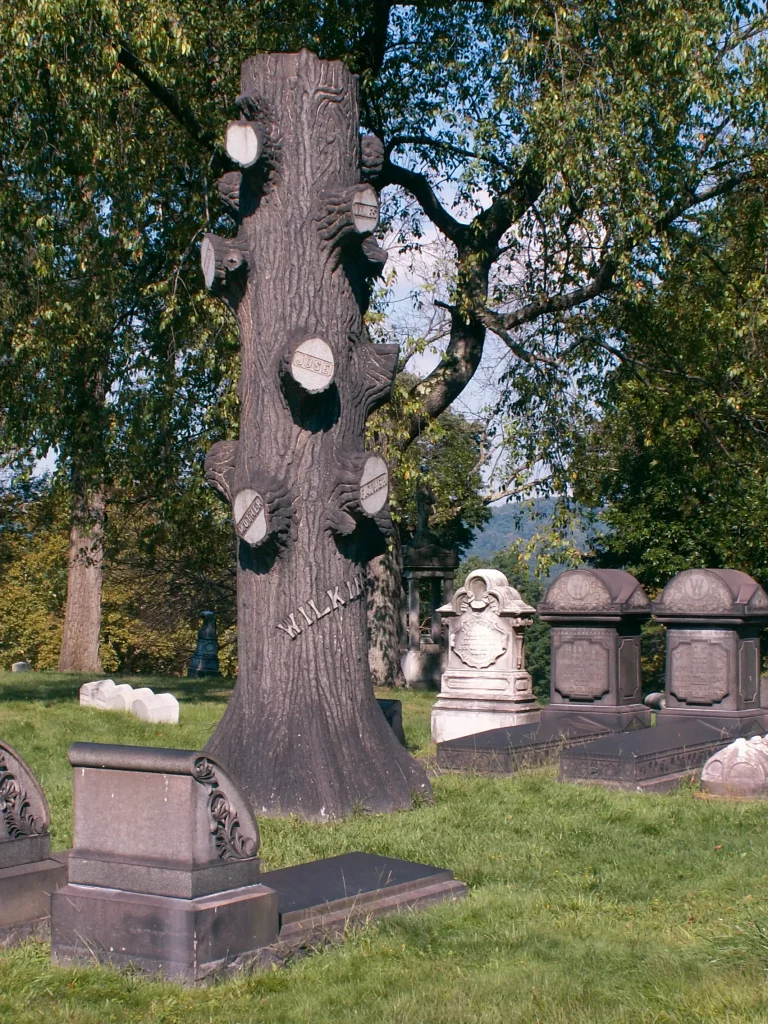
A huge rustic stump, probably the second-largest in Pittsburgh (without measuring, Father Pitt would say the Gilchrist stump in the Homewood Cemetery is probably taller). It is surrounded by graves of the Wilkins family, and each sawed-off branch is made to represent one dead Wilkins—a metaphor that old Pa Pitt thinks at least verges on tasteless, if it does not merrily dance on the grave of taste.
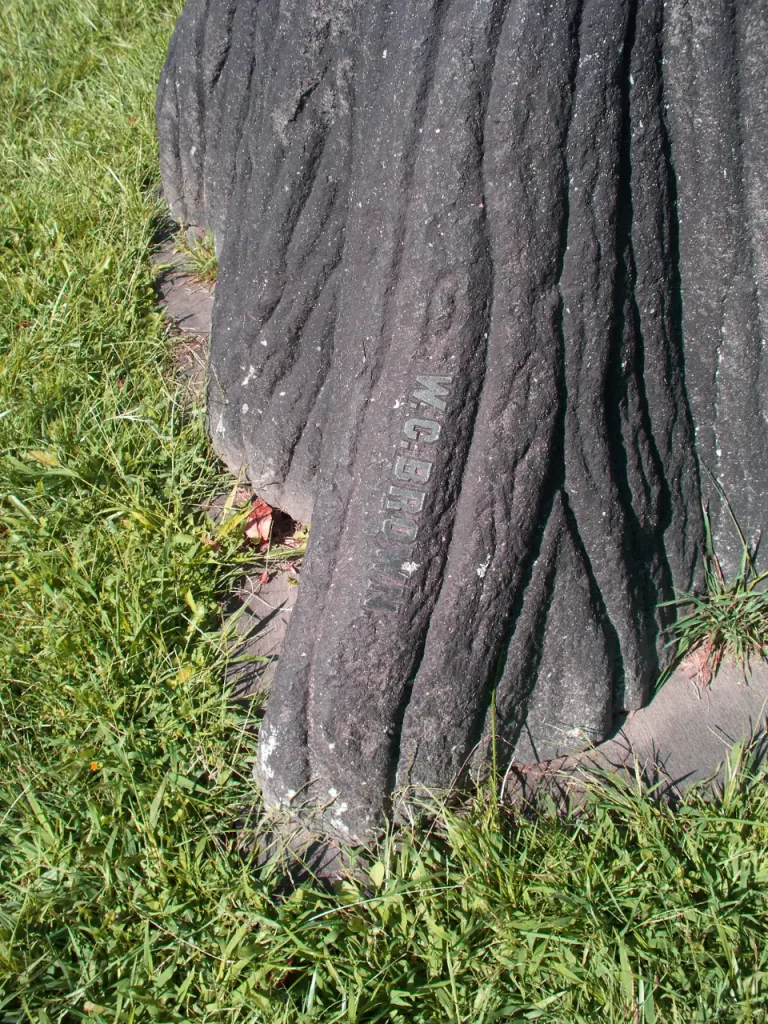
Whatever we think of its artistic merit, it does at least imitate the natural form of a stump with some success, and it is one of the few monuments in the cemetery that actually bear the name of the creator: W. C. Brown, signed in small plain letters on one of the roots.
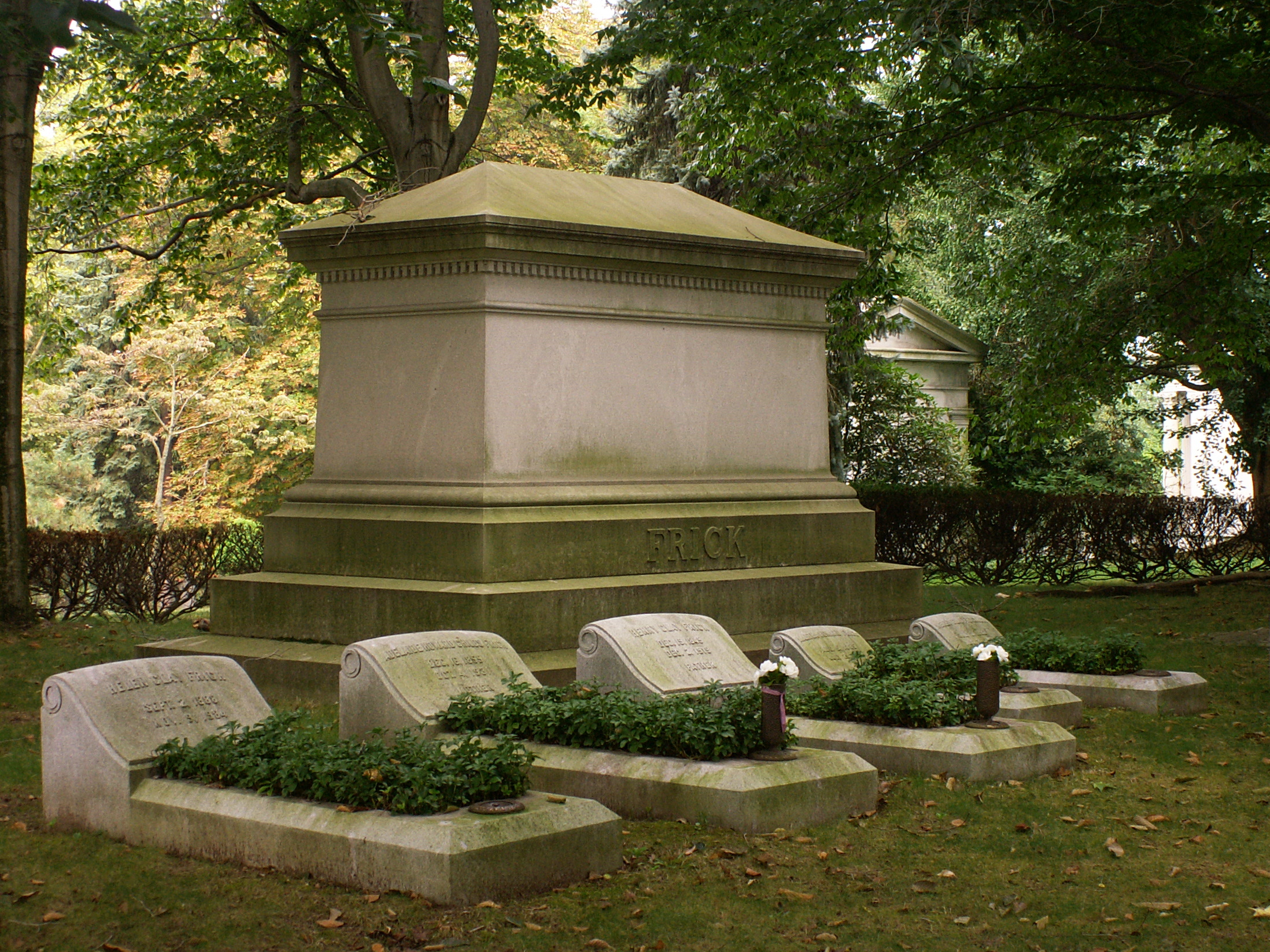
One might expect Henry Clay Frick to rest in a huge mausoleum, but in fact when he went to see Mr. Carnegie in hell he was buried in a modest grave overlooked by a large but very plain classical monument. The rest of his family is also buried here—even Helen and Childs, who refused to speak to each other after the reading of their father’s will, are buried in the same plot, although almost as far apart as possible.
The graves in this plot all match, except for the monument to Childs and his wife, which is entirely different. All the matching graves have places for flower urns, and when Father Pitt visited, someone had left artificial roses for Henry and Adelaide.
Mr. Beinhauer stands with his hand on a rustic stump in a pose reminiscent of advertisements for men’s ready-made clothing in the Pittsburgh German newspapers he might have read.