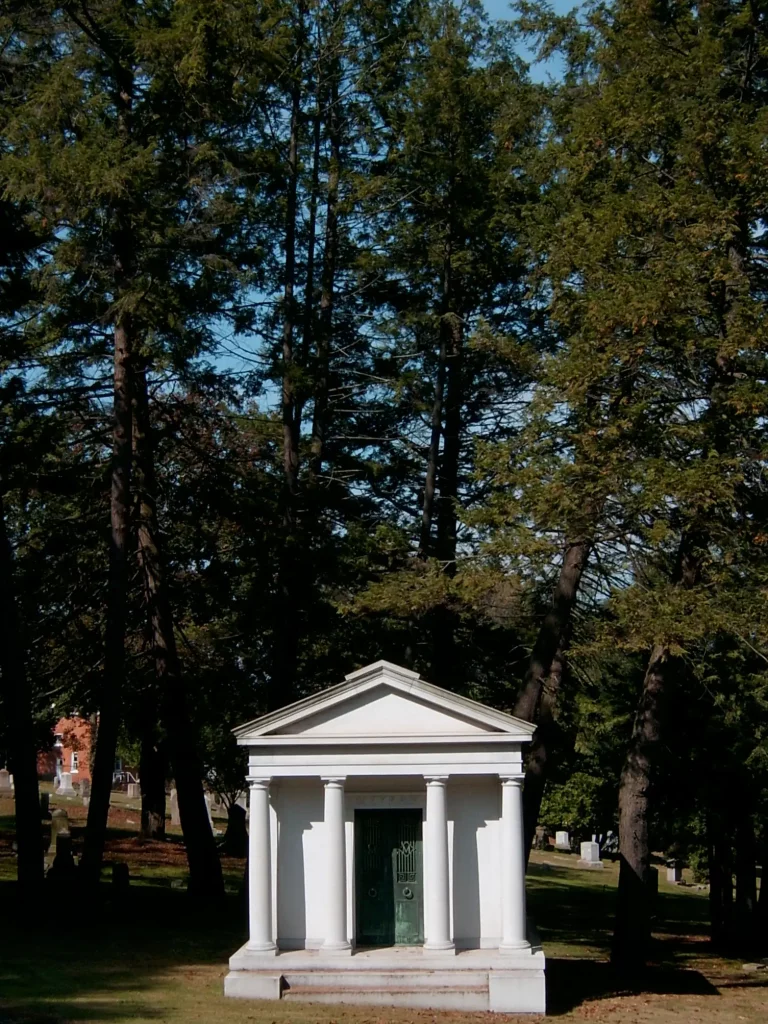
Another variation on the miniature Doric temple; it is not extraordinary, but try to get such a perfectly correct classical mausoleum today. Harry Darlington, Sr., the earliest burial here, died in 1914; this mausoleum was probably built no later than that, and quite likely years earlier, as it was common for rich plot owners to prepare their mausoleums while they were still in the prime of middle age.
-
Darlington Mausoleum, Allegheny Cemetery
-
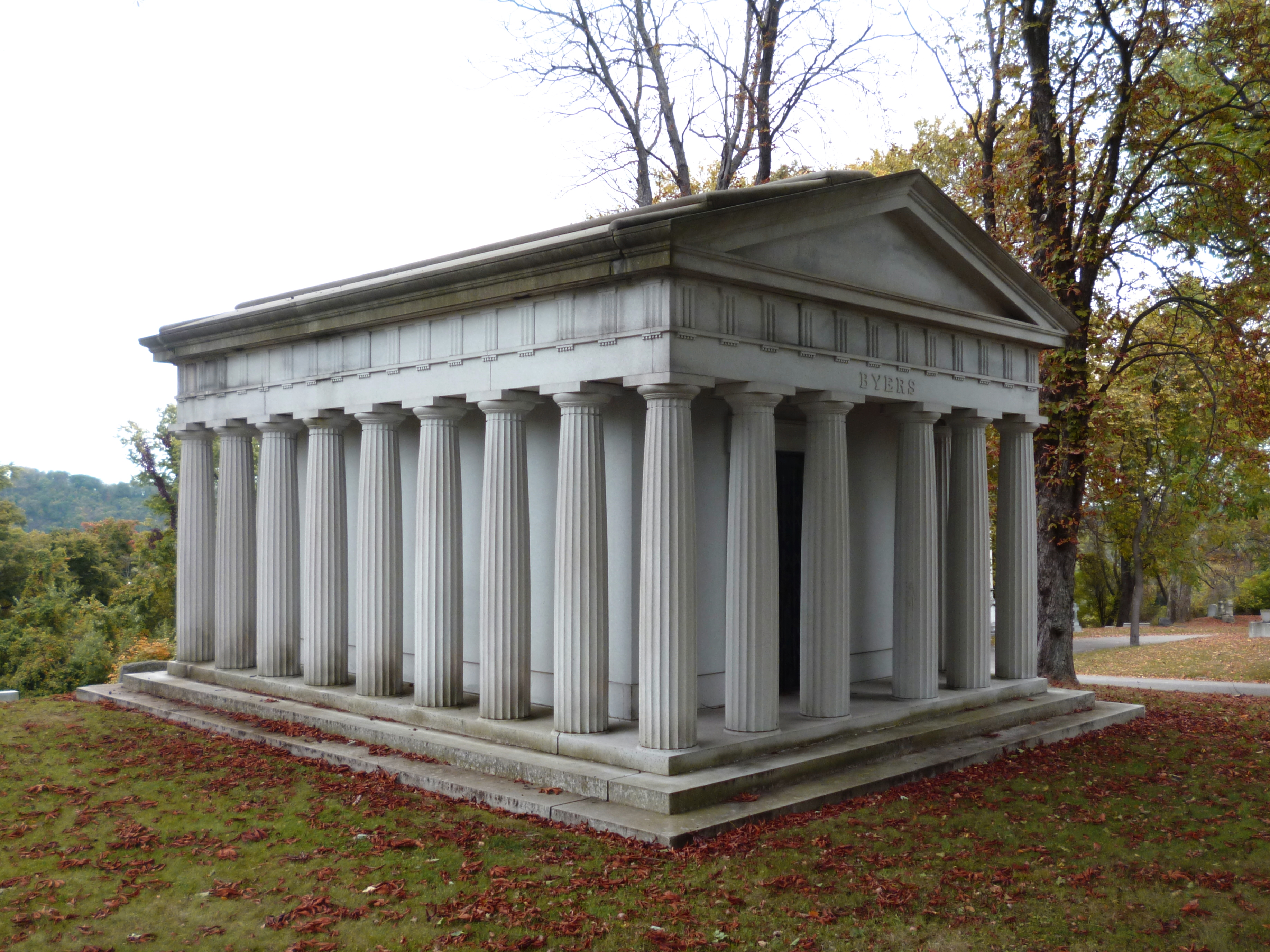
Byers Mausoleum, Allegheny Cemetery

If you want to be remembered as a man of taste, you should be entombed in the Parthenon, or something very like it. The architects were Rutan & Russell.1
This is very similar, but not identical, to the Eaton mausoleum in the Homewood Cemetery. Both are very correct Doric temples, bearing an even stronger resemblance to the Temple of Hephaestus in Athens than to the Parthenon. Alexander McBurney Byers was a titan of the iron industry, which you would never guess from this pristine white temple.


Another picture of the Byers mausoleum.
- Philadelphia Real Estate Record & Builders’ Guide, February 27, 1901, p. 135: “Rutan & Russell have prepared plans for a fine mausoleum to be erected in Allegheny Cemetery for the family of the late A. M. Byers. The contract has been let to C. E. Tayntor & Co., of New York. The cost will be about $35,000.” ↩︎
-
Meyran Mausoleum, Homewood Cemetery
-
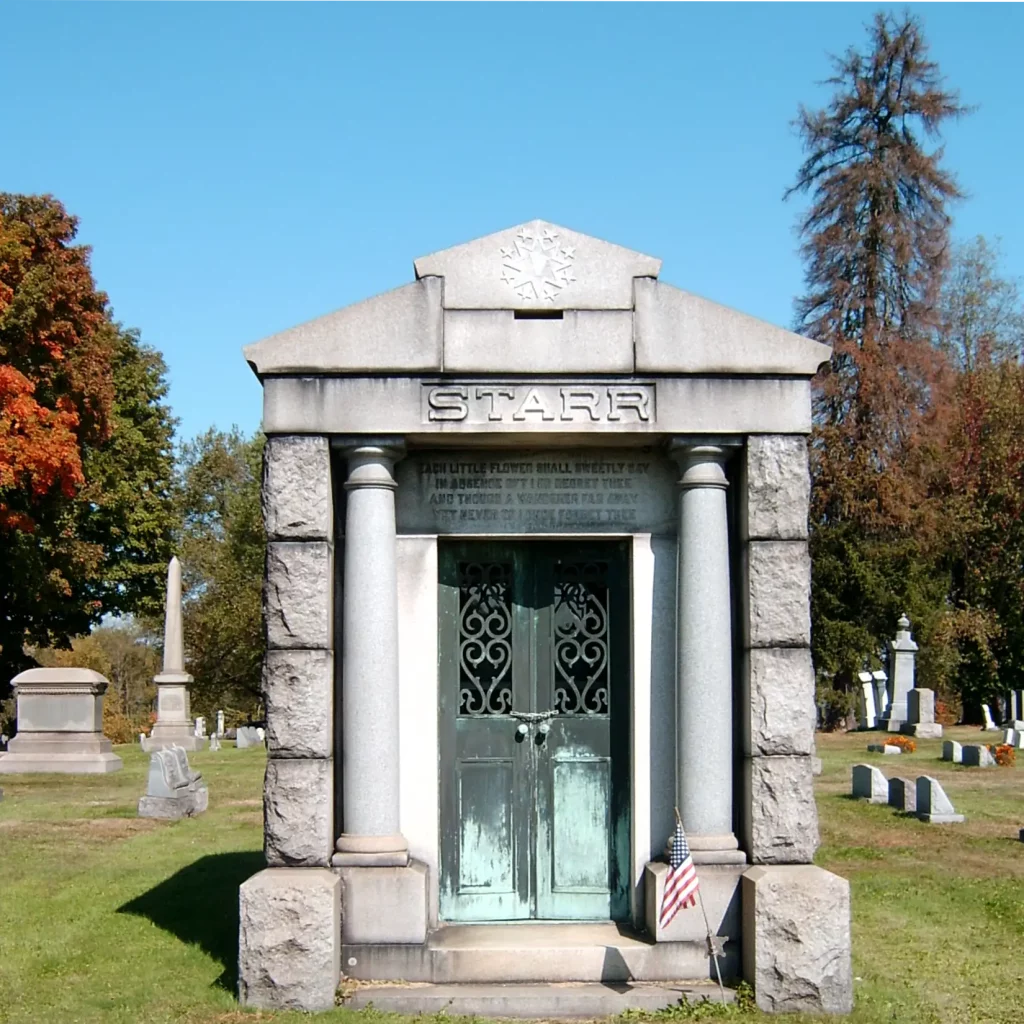
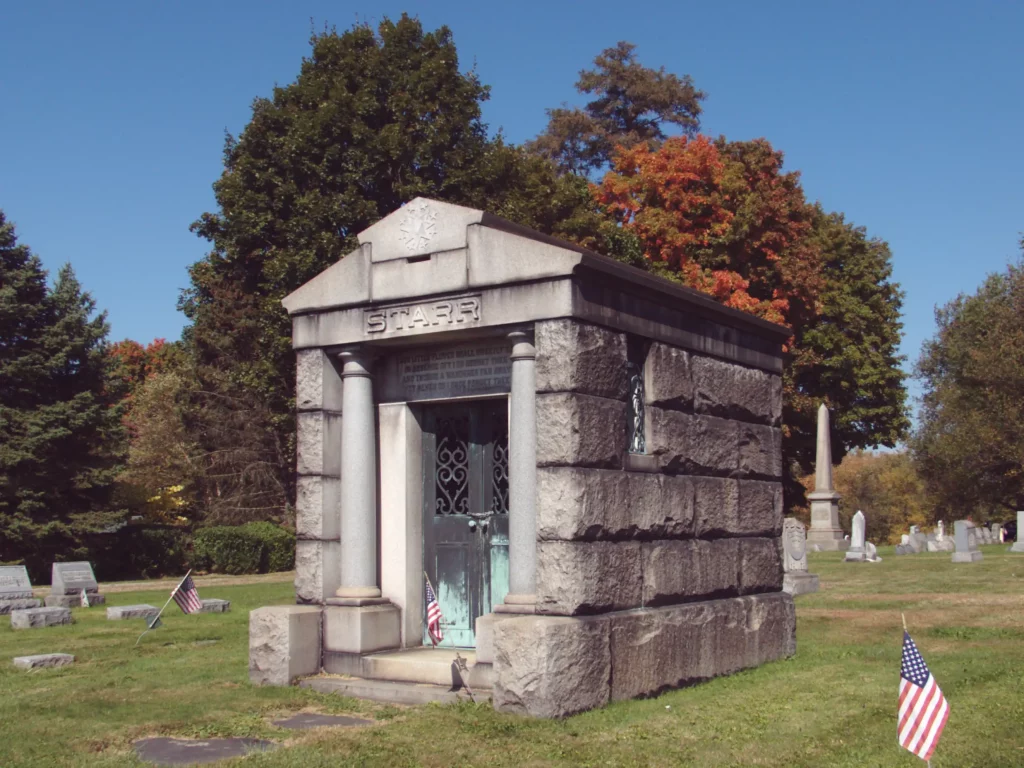
Starr Mausoleum, Zelienople Cemetery

The only private mausoleum in the cemetery, this is not quite as grand a construction as some of the ones in the great city cemeteries. But it must have impressed the neighbors in this little country town.

The epitaph is a version of a poem commonly associated with valentines:
Each little flower shall sweetly say,
In absence oft I do regret thee;
And though a wanderer far away,
Yet never do I once forget thee.
-
Hicks Mausoleum, Homewood Cemetery

There is nothing extraordinary about this design; it is just a very well proportioned Doric mausoleum that shows good conservative taste. Mr. Alfred Hicks, its first resident, was a coal baron in the Allegheny valley, and, like many industrialists, also a banker. Being president of a bank seems to have been considered a logical part-time job for a rich industrialist.