Tag: Mausoleums

  • David L. Clark Mausoleum, Homewood Cemetery

    This fine polished-granite mausoleum announces his name to anyone who visits this sheltered corner of the cemetery; but D. L. Clark’s real monument is the Clark Bar, which trumpets his name to anyone who visits a convenience-store cash register. Polished granite was expensive, but a very good choice for Pittsburgh, since the grime of industry could be wiped off with little labor and no damage to the stone.

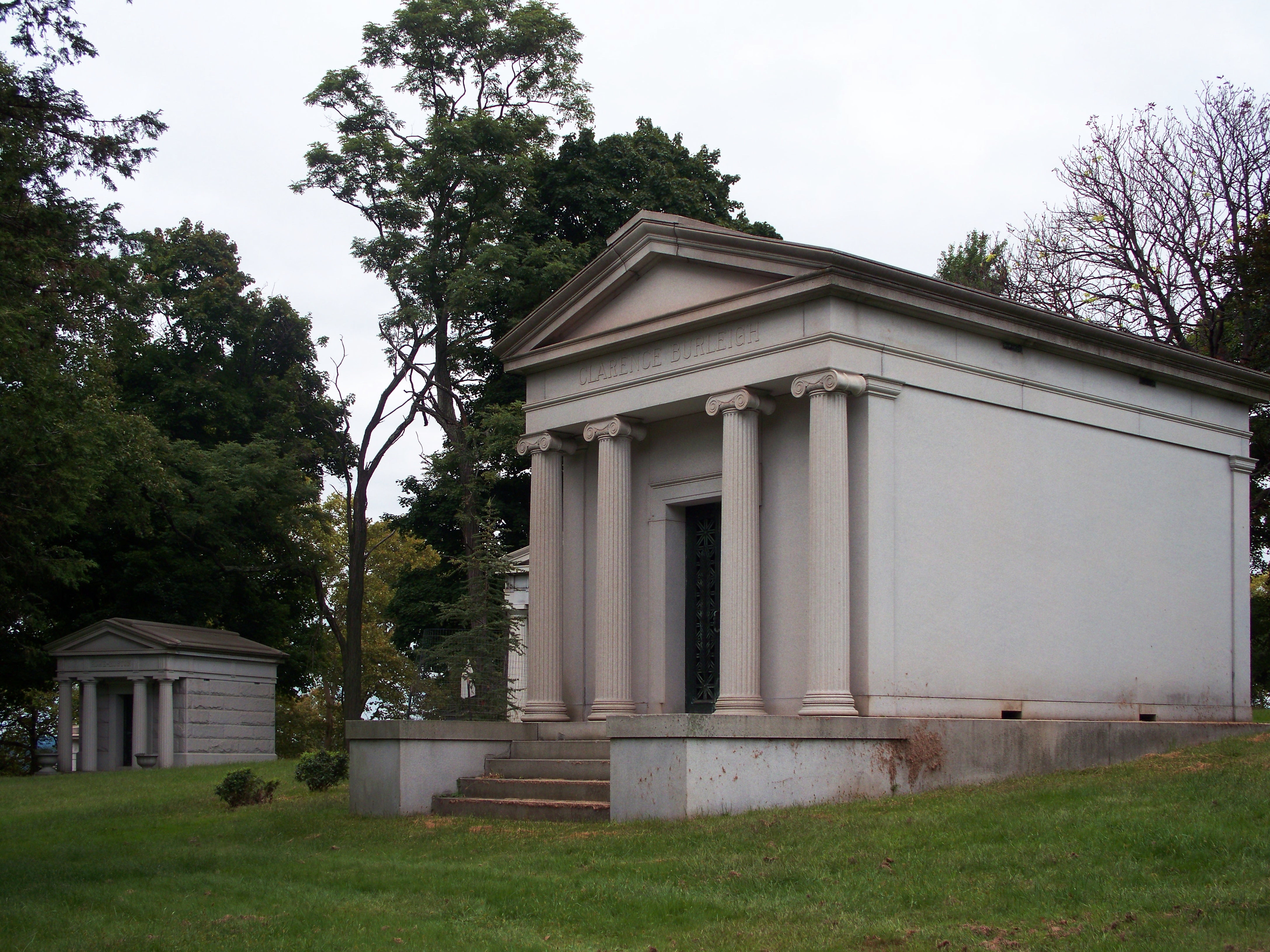
  • Clarence Burleigh Mausoleum, Homewood Cemetery

    If this mausoleum looks a bit like a miniature courthouse, then Mr. Burleigh should feel right at home: he earned his greatest fame, or infamy, as the Allegheny County district attorney who prosecuted the Homestead strikers in 1892. He was later Pittsburgh city solicitor for many years. You may ask how a man who devoted his life to public service gained the kind of wealth evident in this splendid Ionic temple; but if you do ask it, it is because you are not very familiar with Pittsburgh.

  • Chalfant Mausoleum, Allegheny Cemetery

    Mr. John Weakly Chalfant died in 1898, but in 1930 his heirs took it into their heads to have the Ecclesiastical Department of Tiffany Studios design this very elegant classical structure, in which he was reinterred. The whole design is clearly meant to show off a Tiffany stained-glass window, but the window was stolen more than thirty years ago.

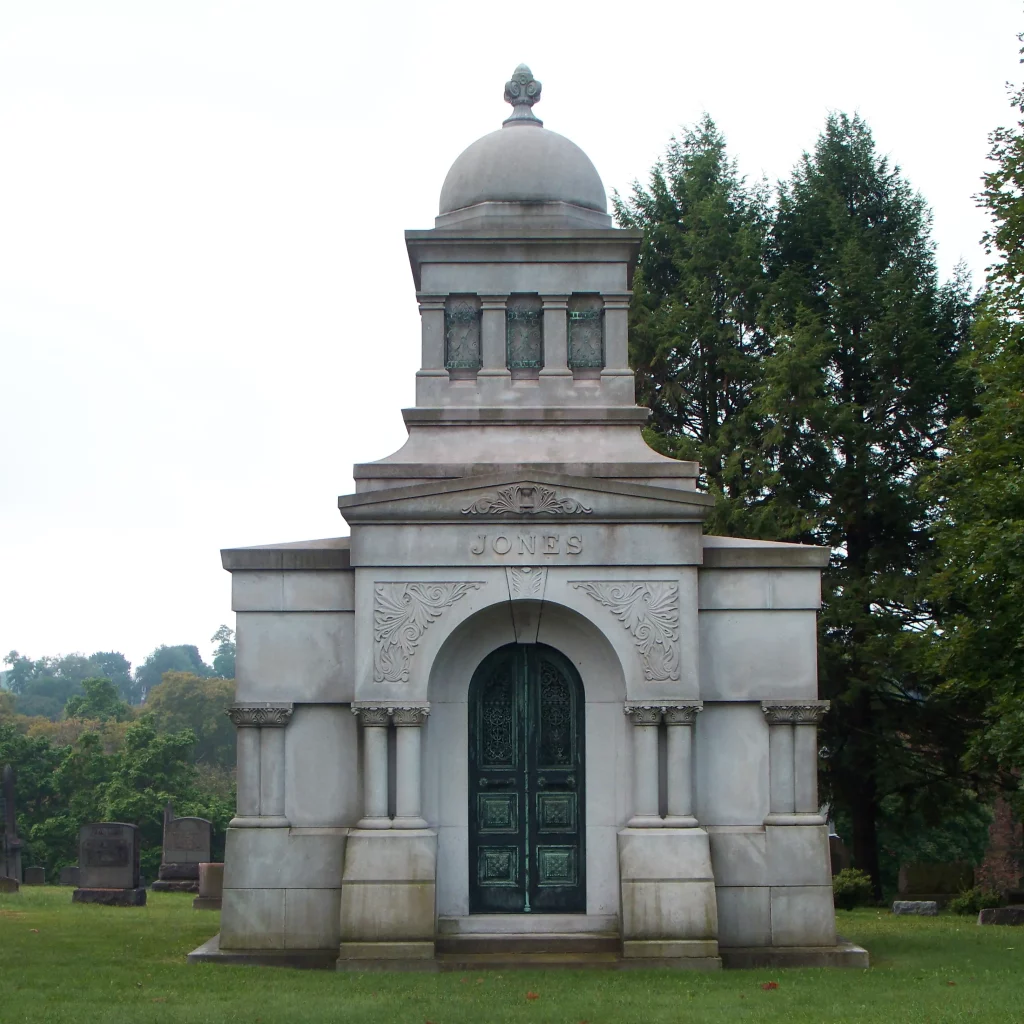
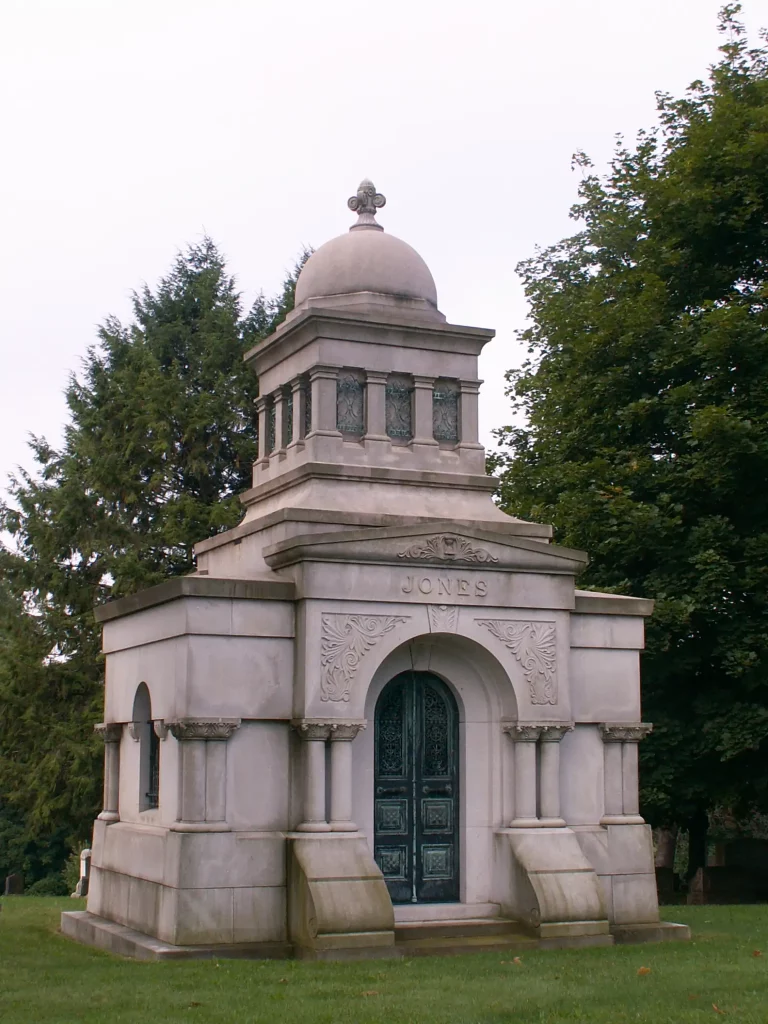
  • Jones Mausoleum, Homewood Cemetery

    What shall we call this style? Father Pitt has heard it called “Byzantine,” but that does not seem right to him; it seems more Romanesque, but with an unusual domed cupola. The cupola adds impressive height, and in spite of the difficulty he had assigning the structure to a particular style, old Pa Pitt thinks it is a pleasing and harmonious design.

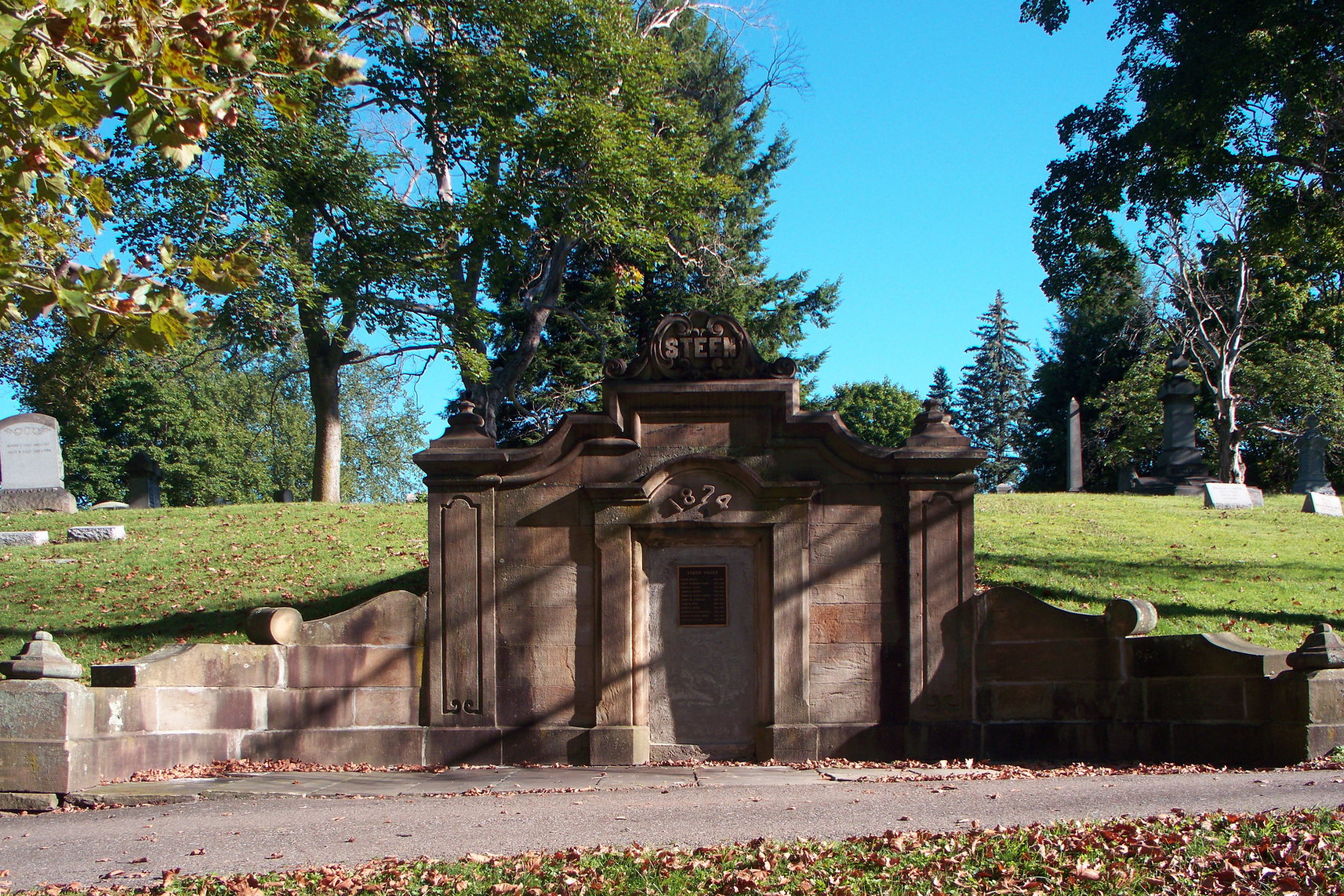
  • Steen Mausoleum, Chartiers Cemetery

    The best way to describe this style is probably “Baroque”: it’s a splendid half-underground mausoleum, of the type usually called a “burial vault” in the days when such things were built. It’s the only one in the Chartiers Cemetery, which was founded in 1861.

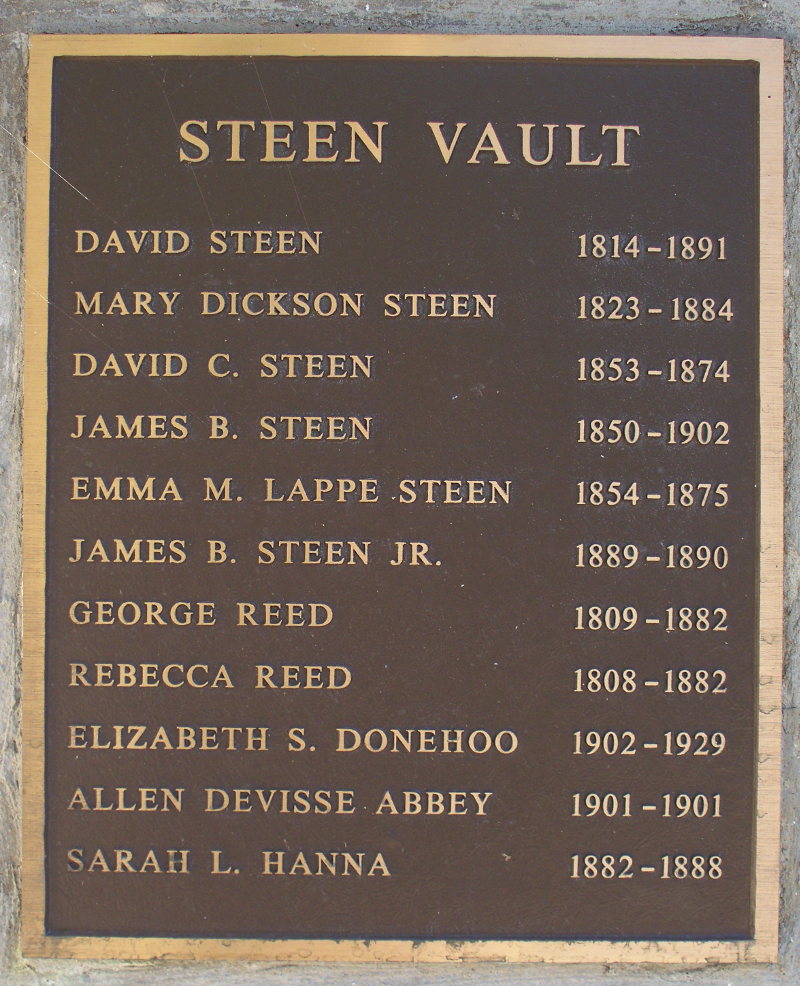
    The front bears the date 1874, which suggests that the vault was built originally for David C. Steen, who died at the age of 20 or 21 in that year. An Emma M. Lappe Steen died the next year, also at the age of 20 or 21; did a young widow never recover from her loss? In fact, the mere dates tell us a good deal about the appalling mortality even among the well-to-do in the nineteenth and early twentieth centuries. In a list of eleven names, four lived past the age of thirty.

    In a later article we have more pictures of the Steen mausoleum.